
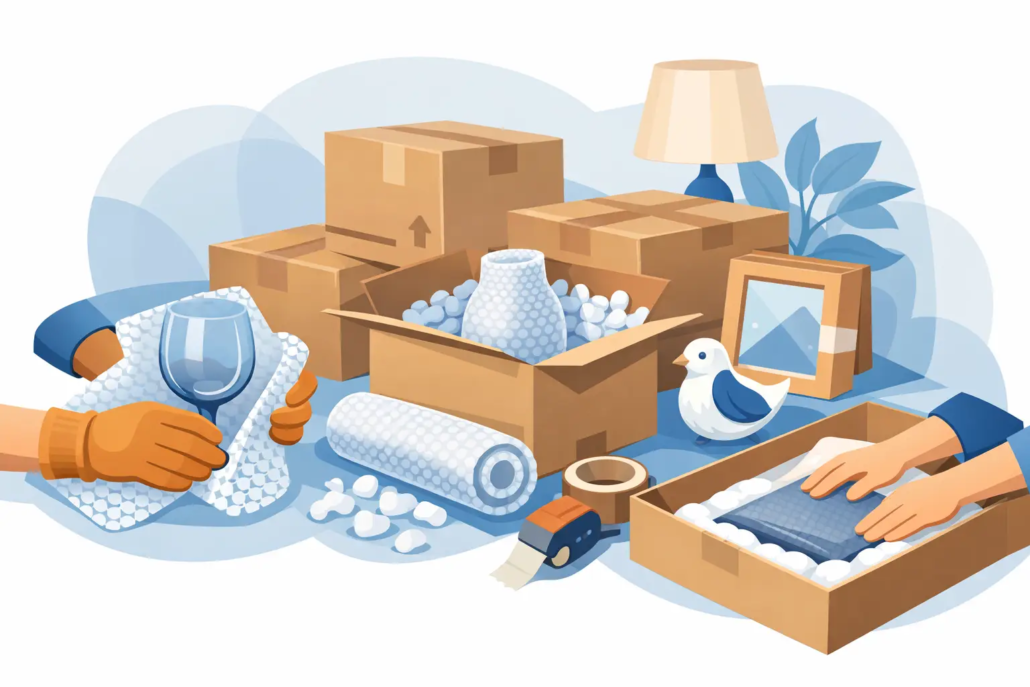
Packing Fragile Items for Moving Safely
A wine glass can look perfectly safe in a box, then crack because it had room to move by just a few centimetres. That is why packing fragile items for moving is less about using the most wrapping and more about preventing impact, pressure and movement from the moment an item leaves its shelf until it reaches your new home.
For households across Yorkshire and further afield, the most reliable approach is to pack breakables steadily, room by room, rather than leaving every delicate item until the final evening. It gives you time to use the right materials, label boxes clearly and avoid the rushed decisions that lead to damaged belongings.
Start with suitable packing materials
Newspaper may seem convenient, but printed paper can mark light-coloured china and does not offer much protection on its own. Bubble wrap, packing paper, strong double-walled boxes and quality tape are better choices for fragile possessions. You will also need cardboard dividers for glasses, soft cloths or towels for extra padding, and a marker pen for clear labels.
Boxes matter as much as wrapping. A large box full of crockery quickly becomes too heavy to lift safely, even if it is well packed. Use smaller boxes for plates, mugs, ornaments and books, keeping each one at a manageable weight. Larger boxes are better reserved for lighter fragile items, such as lampshades, cushions around framed pictures or lightweight decorative pieces.
Before packing, set aside anything that is already chipped, cracked or loose. These items may need extra protection, repair before the move, or a separate decision about whether they are worth taking. Moving is often a useful opportunity to reduce what you no longer need, but avoid throwing away sentimental items in a rush.
Packing fragile items for moving, one item at a time
The safest method is simple: wrap each item individually, cushion the base of the box, fill gaps as you go, then create a padded top layer before sealing it. Empty space is the enemy. A box should feel full and secure, not tightly crammed or able to rattle when gently moved.
Place several sheets of crumpled packing paper or bubble wrap in the bottom of the box. Wrap each item fully, securing the paper with tape only where needed. Too much tape makes unpacking frustrating and can damage delicate finishes when removed.
Once the first layer is in place, add packing paper between items and around the edges of the box. Keep heavier pieces at the bottom and lighter pieces above them. If you are using towels, bedding or clean tea towels as padding, make sure they are dry and free from anything that could scratch polished surfaces.
A quick shake test is worthwhile before you tape the box closed. Lift it carefully and give it a very gentle movement. If you hear clinking or feel items shifting, open it and fill the gaps. It takes a minute now and can save a treasured item later.
Glasses, mugs and stemware
Wrap glasses from the rim down, using enough paper to cover the whole surface. For stemware, gently fill the bowl with crumpled paper first, then wrap the stem and bowl together. Do not pack glasses inside one another unless they are designed to stack, as pressure during transport can cause them to split.
Cell dividers offer useful protection for wine glasses and tumblers, particularly when several are packed in one box. If you do not have dividers, use a small box and build layers with thick paper between each glass. Mark the box with its contents, the room it belongs in and a clear “Fragile” notice on more than one side.
Plates, bowls and kitchenware
Plates are stronger when packed on their edge rather than laid flat. Wrap each plate separately, then stand them upright in a small, well-padded box. Place cardboard or extra paper between every few plates to spread pressure more evenly.
Bowls can be packed in a similar way, with paper inside each bowl and wrapping around the outside. Pans are not usually fragile, but glass lids should be wrapped separately and placed upright with other glass items. Knives need their blades protected with folded card or thick paper, then taped securely so no sharp edge is exposed when unpacking.
Mirrors, pictures and glass panels
Mirrors and framed pictures need protection across the glass, not only around the frame. Use cardboard corners first, then cover the front and back with flat cardboard or specialist picture wrap. Tape an X across the glass surface if appropriate, as this can help hold broken pieces together should an accident happen.
Always carry mirrors and pictures upright, never flat beneath heavy boxes. Keep them against a solid side wall in the vehicle, secured so they cannot slide. Very large, antique or unusually valuable pieces may need specialist packing and handling rather than a standard box.
Lamps, ornaments and electronics
Remove lampshades and bulbs before moving a lamp. Wrap the base separately, and protect the shade with clean paper rather than bubble wrap pressed directly against it, which can leave dents. Keep small fittings, screws and cables in labelled bags taped to the relevant item or stored together in a clearly marked essentials box.
Ornaments should be individually wrapped and packed in layers. Avoid putting a heavy ceramic figure on top of smaller pieces, even if everything is padded. For televisions, monitors and other electronics, the original packaging is ideal if you still have it. Otherwise, use a fitted box, protect the screen with a soft cloth and cardboard, and avoid placing anything on top.
Label boxes for safe handling
“Fragile” is helpful, but it is not enough on its own. A useful label tells you what is inside, which room it should go to and which way up it needs to remain. For example: “Kitchen – glassware – this side up” gives far clearer instructions than simply writing “breakables”.
Use arrows to show the correct orientation and label at least two sides of the box, not just the top. If a box contains particularly valuable or sentimental items, consider moving it yourself where practical. This depends on the item and your journey: a small jewellery box or family photo album may be best kept with you, while a properly packed dinner set is usually safer in a professionally loaded vehicle than on a car seat.
Loading is part of the protection
Careful wrapping can still be undone by poor loading. Fragile boxes should be loaded after heavier furniture and cartons are secure, then positioned where they cannot be crushed, topple or slide. They should never sit beneath heavy boxes, and they need a stable, level base.
This is where experienced removals teams make a real difference. Trained movers know how to distribute weight in a van or lorry, protect furniture and secure loads for the road. At IMove Removals, careful handling is part of the service from collection through to unloading, helping customers move with greater confidence.
If you are moving yourself, avoid stacking fragile boxes too high and keep them away from loose items that may shift during braking. Plan the unloading order as well. Boxes marked for the kitchen or living room should go directly to those rooms, reducing unnecessary carrying and the chance of someone placing them in a busy hallway.
When professional packing is the sensible option
Not every move needs a full packing service. If you have a small flat, enough time and only a few boxes of breakables, packing them yourself can be a practical way to manage costs. The key is to start early and use proper materials rather than trying to make unsuitable boxes work.
Professional packing is often worth considering when time is short, there are antiques or high-value items involved, or you are coordinating a larger family move alongside work and childcare. It can also be reassuring for long-distance moves, where boxes will spend more time in transit and need to withstand additional handling.
Give fragile belongings the time and space they deserve. A calm, methodical packing session now means the first glass you unpack in your new kitchen is ready for a celebratory cup of tea, not a disappointing trip to the bin.


Leave a Reply
Want to join the discussion?Feel free to contribute!